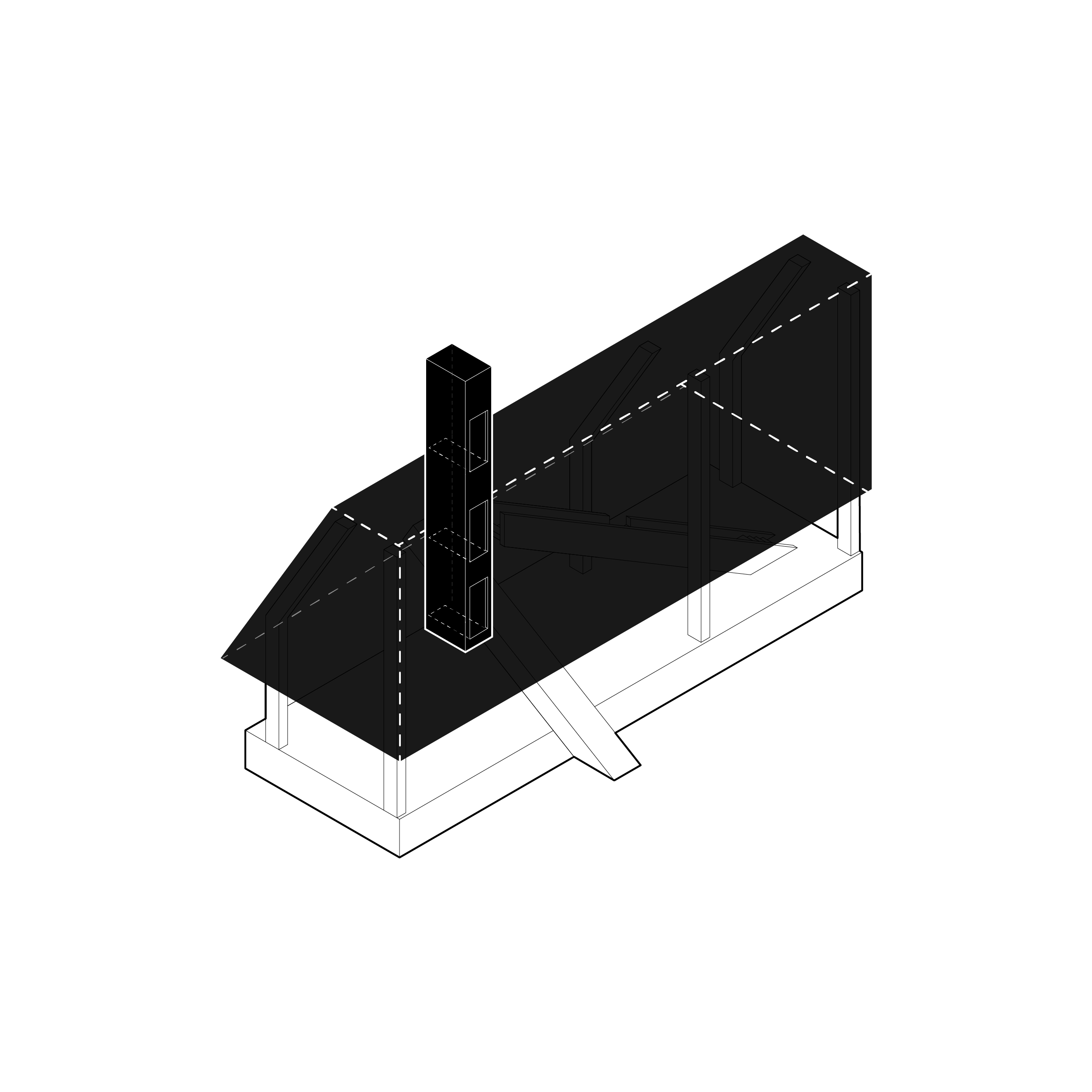
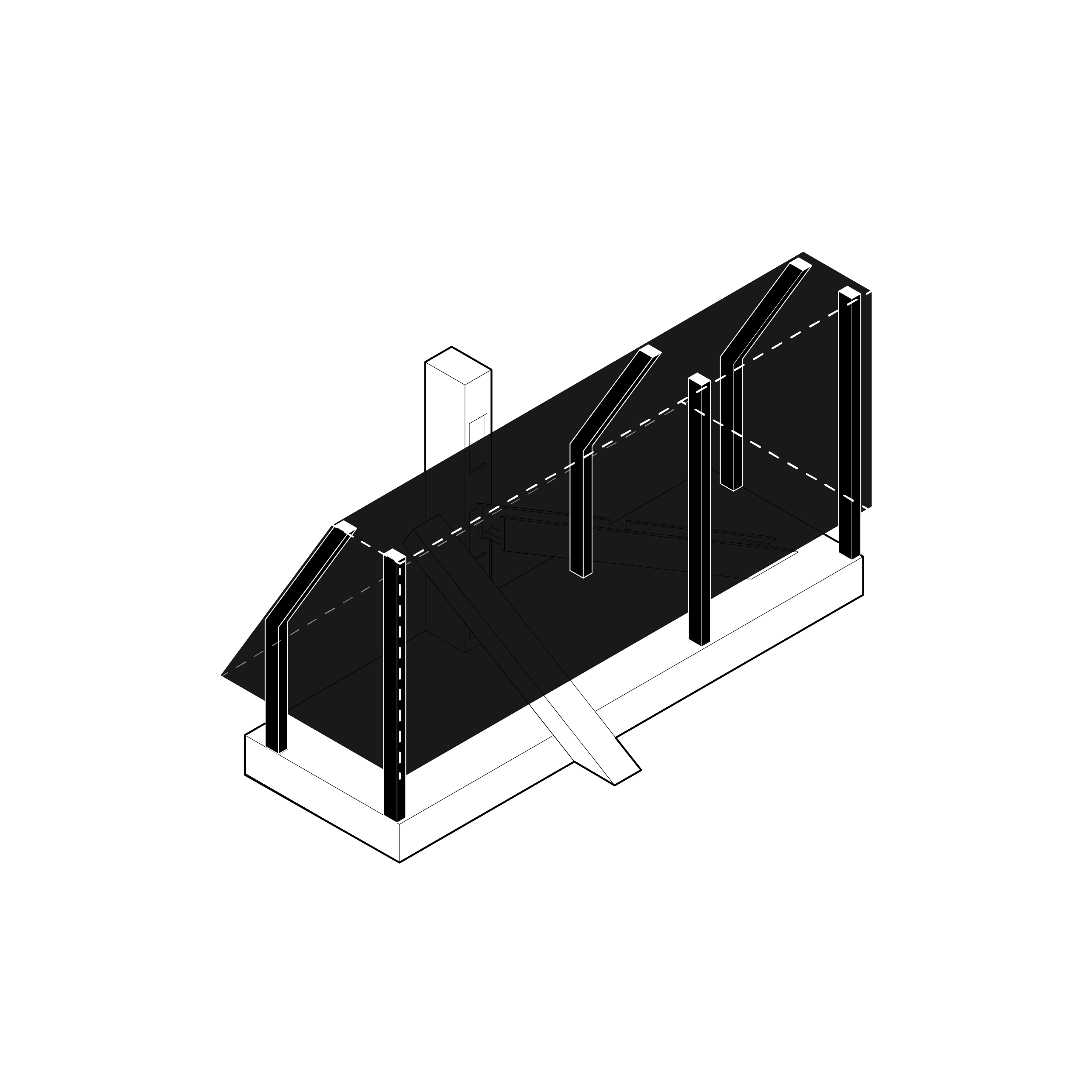
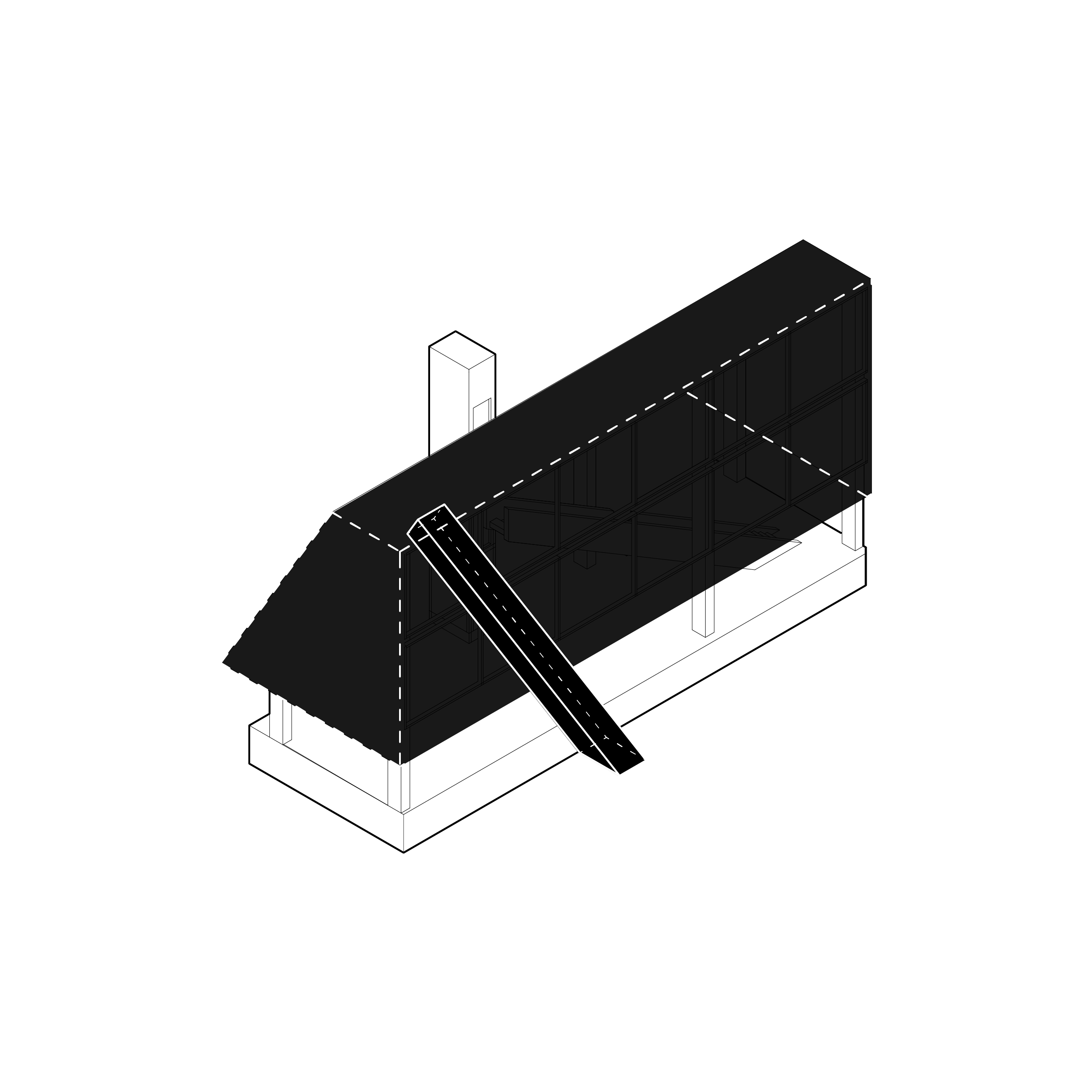
The project is structured around a cyclical system that operates through time rather than form. Based on the rotation of plantation forestry, the site is divided into four zones, each undergoing planting, growth, harvesting, and regeneration in a sixteen-year cycle. Timber is not treated as a static material but as a moving element— circulating between forest, processing, and architectural use. This circulation forms a spatial and temporal loop, where construction, decay, and replacement are continuously visible.
An eight-meter grid organizes the entire site, functioning simultaneously as a planting matrix, structural system, and spatial framework. Within this consistent order,contrasting materials—wood, steel, and concrete—are deliberately placed alongside different programs such as forest, library, and wood industry. The grid does not eliminate contradiction; instead, it allows differences in materiality, function, and atmosphere to coexist within a shared rhythm.
Through this system, the library becomes a mediator between forest cycles and human activity. The grid links spaces of reading, production, and growth, while the circulation of trees connects daily use with ritual moments of harvesting and renewal. What appears as contradiction—nature and industry, permanence and change—is held together by repetition, alignment, and time.